Description
Premium Growth Hormone Peptide Blend for Sale | 10mg Each per Vial | ≥99% Purity | 48-Hour Delivery Across EU & UK
Ipamorelin + Mod GRF 1-29: The Synergistic Growth Hormone Secretagogue Blend for Advanced Research
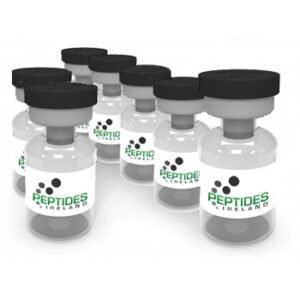
eupeptidelap.co.uk is proud to present the Ipamorelin 10mg + Mod GRF 1-29 10mg peptide blend, a premium research-grade combination of two well-characterized growth hormone secretagogues manufactured to the highest analytical standards. As a trusted peptide vendor uk and leading EU peptide supplier, we provide researchers across Europe with this synergistic blend for sale that delivers exceptional purity, consistency, and documented quality .
This dual-peptide research blend combines Ipamorelin, a selective growth hormone secretagogue receptor (GHSR) agonist, with Mod GRF 1-29 (also known as CJC-1295 No DAC), a synthetic analog of growth hormone-releasing hormone (GHRH) . Each vial contains 10mg of each peptide, supplied as a lyophilized solid to maintain long-term stability and integrity. HPLC-verified at ≥99% purity with full Certificates of Analysis provided, this blend is widely studied in laboratory models of growth hormone signaling, endocrine regulation, cellular recovery pathways, and metabolic research .
Ipamorelin is a pentapeptide that belongs to the growth hormone-releasing peptide (GHRP) class . It is hypothesized to operate as a selective agonist of the ghrelin receptor (growth hormone secretagogue receptor, GHSR), stimulating growth hormone release in a pulsatile manner that aligns with physiological secretion patterns . What distinguishes Ipamorelin from other GHRPs is its remarkable selectivity—it stimulates GH release without significantly influencing prolactin, cortisol, or adrenocorticotropic hormone (ACTH) levels . Studies suggest that Ipamorelin may bind to GHS-R1a receptors, theoretically triggering GH release through a pathway separate from GHRH, making it a valuable tool in scientific studies focused on GH without cross-reactivity concerns .
Mod GRF 1-29 (Modified Growth Hormone Releasing Factor 1-29) is a truncated analog of endogenous GHRH, consisting of the first 29 amino acids of the native hormone—a sequence believed to retain full biological activity for stimulating growth hormone release . Unlike unmodified GHRH, Mod GRF 1-29 incorporates specific amino acid substitutions designed to increase stability and resistance to enzymatic degradation . These modifications include D-amino acids at key positions that render the peptide less susceptible to dipeptidyl peptidase IV (DPP-IV) cleavage, potentially extending its activity window in experimental settings .
For researchers seeking to buy peptide online EU for investigations into growth hormone dynamics, endocrine regulation, metabolic studies, or tissue regeneration, eupeptidelap.co.uk offers this premium blend with comprehensive documentation, including Certificates of Analysis and batch-specific purity data. Whether your laboratory is based in London, Berlin, Paris, or anywhere in the European Union, our guaranteed 48 hour delivery peptide service ensures your research continues without interruption .
The Scientific Foundation of the Ipamorelin + Mod GRF 1-29 Blend
Complementary Mechanisms of Action
The Ipamorelin and Mod GRF 1-29 blend represents a strategic combination of two peptides that target distinct receptors within the growth hormone axis, potentially offering synergistic effects that surpass what either peptide might achieve alone .
Mod GRF 1-29: GHRH Receptor Activation
Mod GRF 1-29 is designed to mimic the signaling properties of endogenous growth hormone-releasing hormone (GHRH). Research indicates that it selectively binds to GHRH receptors located on somatotroph cells in the anterior pituitary gland . Upon binding, it is thought to induce a conformational change that initiates multiple intracellular signaling events .
-
cAMP Pathway Activation: Mod GRF 1-29 binding activates G-proteins associated with the inner surface of the cell membrane, leading to the production of cyclic adenosine monophosphate (cAMP) as a secondary messenger . Elevated cAMP levels activate protein kinases that phosphorylate target proteins, including transcription factors that may translocate into the cell nucleus and influence gene expression for increased growth hormone synthesis .
-
Prolonged Stimulation: Unlike endogenous GHRH, which has a very short half-life, Mod GRF 1-29’s structural modifications confer resistance to enzymatic degradation, potentially supporting sustained stimulation of growth hormone release over a prolonged period .
Ipamorelin: GHSR Receptor Activation
Ipamorelin is generally regarded as a growth hormone secretagogue receptor (GHS-R) ligand, also referred to as the ghrelin receptor . Upon binding to GHS-Rs, Ipamorelin engages distinct signaling pathways :
-
PLC Activation: Ipamorelin binding activates phospholipase C (PLC), which catalyzes the production of second messengers that increase intracellular calcium and activate protein kinase C (PKC), culminating in GH-containing vesicle exocytosis .
-
Somatostatin Suppression: Studies suggest that GHSR agonists like Ipamorelin also cause significant GH release by suppressing somatostatin (an antagonist to GHRH), in addition to stimulating GH release from the anterior pituitary .
-
Pulsatile Secretion: It has been hypothesized that Ipamorelin may stimulate growth hormone release in a pulsatile manner, aligning with the physiological secretion pattern of growth hormone .
Synergistic Potential
The differences in how each peptide interacts with pituitary cells have led researchers to hypothesize that using both compounds simultaneously may yield synergistic actions on growth hormone secretion, surpassing what either might achieve alone . The synergy comes both from the suppression of somatostatin and the fact that Ipamorelin increases GH release per somatotrope, while GHRH analogs like Mod GRF 1-29 increase the number of somatotropes releasing GH .
Studies examining similar GHRH analogs and GHS-R agonists support this concept. By promoting prolonged GH levels with selective pulsatility, this blend appears to create favorable conditions for investigating GH dynamics in research models with higher fidelity than either peptide alone .
Key Research Applications
Growth Hormone Signaling and Pituitary Research
The Ipamorelin and Mod GRF 1-29 blend is extensively used in studies investigating growth hormone dynamics, pituitary function, and endocrine regulation . The complementary mechanisms of these peptides provide researchers with a sophisticated tool for exploring :
-
Pulsatile GH Release: Mod GRF 1-29’s interaction with GHRH receptors and Ipamorelin’s GHSR activation allow researchers to study the complex patterns of physiological GH secretion .
-
Receptor Synergy: The blend enables investigation of how GHRH and GHSR pathways interact at the cellular level, potentially revealing insights into receptor crosstalk and signal integration .
-
Hypothalamic-Pituitary Axis: Both peptides influence the hypothalamic-pituitary axis, making them valuable for studying feedback mechanisms and hormonal regulation .
Metabolic Research and Adipose Tissue Studies
Growth hormone is recognized for its lipolytic actions, particularly within visceral fat depots . By stimulating GH release through complementary pathways, this peptide blend may indirectly support investigations into :
-
Lipolysis and Adipogenesis: Research suggests growth hormone plays a role in lipolysis—the breakdown of triglycerides into free fatty acids and glycerol . The blend may help researchers study lipid metabolism within adipocytes and explore how GH signaling influences the differentiation of preadipocytes into mature fat cells .
-
Visceral Fat Research: Growth hormone receptors are found at higher density in visceral adipocytes compared to subcutaneous adipocytes . This makes the blend particularly relevant for studying depot-specific fat metabolism and the metabolic implications of visceral adiposity .
-
Energy Balance: The peptides’ potential impacts on growth hormone dynamics may illuminate pathways underlying metabolic syndromes, obesity, and lipodystrophy .
Bone Density and Musculoskeletal Research
Both Mod GRF 1-29 and Ipamorelin are posited to influence bone cells and bone-related tissues through pathways related to growth hormone secretion . Research applications include :
-
Osteoblast Activity: By potentially supporting growth hormone release, these peptides might stimulate osteoblast proliferation and function, promoting bone matrix deposition .
-
Bone Mineralization: Investigations suggest growth hormones may indirectly support bone mineral density through their impact on calcium and phosphate metabolism .
-
Cortical Bone Studies: Ipamorelin has been observed to potentially increase bone dimensions through subperiosteal bone formation, without necessarily altering the intrinsic volumetric mineral density .
Cellular Recovery and Tissue Regeneration
The role of growth hormone in tissue repair and regeneration makes this peptide blend a candidate for studying regenerative processes . Controlled stimulation of growth hormone pathways may allow researchers to investigate :
-
Cellular Proliferation and Differentiation: How GH signaling influences the dynamics of cell growth and specialization in damaged tissues .
-
Connective Tissue Properties: The blend’s potential impacts on collagen synthesis and extracellular matrix integrity, particularly relevant for studies on tendon and ligament integrity .
-
Musculoskeletal Recovery: Research suggests that GH may contribute to both muscular tissue recovery and hypertrophy, areas critical to physical conditioning and injury recovery studies .
Sleep and Chronobiology Research
As suggested by several studies, daily growth hormone production may affect NREMS (deep non-REM sleep) . Researchers hypothesize that a blend of peptides that influences growth hormone production may also affect sleep patterns :
-
GHRH and Sleep: The quantity of GHRH produced in the hypothalamus and its mRNA level is connected with sleep-wake behavior during the day cycle and sleep restriction and restoration .
-
Hypothalamic Action: The scientific community postulates that GHRH may stimulate NREMS by acting on the hypothalamus, with GABAergic neurons in the anterior hypothalamus/preoptic area potentially mediating this effect .
Endocrinology and Hormonal Regulation
In endocrinology, understanding the regulation of hormonal cascades is crucial. The combination of Mod GRF and Ipamorelin may provide a platform for studying :
-
Hormonal Feedback Loops: The interplay between growth hormone, insulin-like growth factor-1 (IGF-1), and other endocrine factors .
-
Secretion Dynamics: How different signaling pathways converge to regulate the timing and magnitude of hormone release .
-
Selectivity Studies: Ipamorelin’s unique property of stimulating GH release without affecting ACTH or cortisol makes it particularly valuable for isolating GH-specific effects .
Quality Assurance: Setting the Standard for Research Compounds
Manufacturing Excellence
eupeptidelap.co.uk sources the Ipamorelin + Mod GRF 1-29 blend from certified GMP facilities with rigorous quality control protocols :
-
HPLC Purity Analysis: ≥99% purity verified by high-performance liquid chromatography
-
Mass Spectrometry Verification: Molecular weight confirmation via LC-MS
-
Batch-Specific Certificates of Analysis: Complete documentation for each production run
-
Precisely Blended: Each vial contains exactly 10mg of Ipamorelin and 10mg of Mod GRF 1-29, quality-controlled for accurate composition
Chemical and Product Specifications
| Specification | Detail |
|---|---|
| Product Name | Ipamorelin 10mg + Mod GRF 1-29 10mg Blend |
| Blend Composition | Ipamorelin 10mg, Mod GRF 1-29 10mg per vial |
| Form | Lyophilized solid (freeze-dried powder) |
| Purity | ≥99% (HPLC verified) |
Mod GRF 1-29 Specifications :
| Property | Value |
|---|---|
| CAS Number | 863288-34-0 |
| Molecular Formula | C₁₅₂H₂₅₂N₄₄O₄₂ |
| Molecular Weight | 3367.9 g/mol |
| Amino Acid Sequence | Tyr-D-Ala-Asp-Ala-Ile-Phe-Thr-Gln-Ser-Tyr-Arg-Lys-Val-Leu-Ala-Gln-Leu-Ser-Ala-Arg-Lys-Leu-Leu-Gln-Asp-Ile-Leu-Ser-Arg-NH₂ |
Ipamorelin Specifications :
| Property | Value |
|---|---|
| CAS Number | 170851-70-4 |
| Molecular Formula | C₃₈H₄₉N₉O₅ |
| Molecular Weight | 711.88 g/mol |
| Amino Acid Sequence | Aib-His-D-2-Nal-D-Phe-Lys-NH₂ |
| Specification | Detail |
|---|---|
| Storage | Store at −20°C in a dry, dark environment |
| Shipping | Ambient temperature with protective packaging |
| Intended Use | Research and laboratory use only |
| Documentation | Certificate of Analysis provided with each batch |
Stability and Handling
Lyophilized Form: The peptides are supplied as a lyophilized solid to ensure long-term stability and integrity . Prior to reconstitution, allow the vial and solvent to reach ambient laboratory temperature .
Reconstitution: Reconstitute using bacteriostatic water or another suitable solvent according to your research protocol . Gentle swirling—not shaking—is recommended to dissolve the powder completely .
Storage After Reconstitution: Avoid repeated freeze–thaw cycles. Aliquot into single-use portions and store at -20°C for short-term storage or -80°C for extended stability .
Real-World Research Applications and Investigator Experiences
Selectivity Profile in Endocrine Research
Researchers investigating endocrine pathways consistently value Ipamorelin’s remarkable selectivity profile . Unlike some other GHRPs, Ipamorelin is thought to exhibit a unique specificity, potentially making it a valuable tool for studying growth hormone dynamics without confounding variables associated with broader hormonal fluctuations . Studies suggest that Ipamorelin appears to selectively bind to the ghrelin receptor, which is hypothesized to trigger growth hormone release while minimizing support for other endocrine pathways such as cortisol or prolactin .
Pulsatile GH Release Studies
The combination of Mod GRF 1-29 and Ipamorelin allows researchers to study pulsatile GH release patterns . Mod GRF 1-29’s near-ideal fast action duration enables pulsatile dosing in experimental settings, making it preferable for studies requiring precise temporal control . This characteristic distinguishes it from other GHRH analogs with longer action durations that may not support the same pulsatile dynamics .
Adipose Tissue Investigations
Studies examining Mod GRF 1-29 and Ipamorelin suggest both peptides may influence adipose tissue distribution, particularly through their association with growth hormone secretion . Growth hormone’s lipolytic actions, especially within visceral fat depots, make this blend relevant for obesity and metabolic research . Investigations purport that growth hormone impacts adipose tissue in a depot-specific manner and may influence other features of adipose tissue including senescence, adipocyte subpopulations, and fibrosis .
Bone Tissue Research
Research on Ipamorelin suggests that via its impact on growth hormone levels, the peptide may modulate osteoblast function and related progenitor cell activity . This modulation may lead to better-supported subperiosteal bone formation, resulting in a potential increase in bone dimensions without necessarily altering the intrinsic volumetric mineral density . Studies have observed that increases in cortical and total bone mineral content may be due to increased growth of the bones with increased bone dimensions .
Key Benefits
-
Premium Quality Manufacturing: GMP-certified production with rigorous quality control, ≥99% HPLC-verified purity
-
Synergistic Blend: Combines GHRH analog (Mod GRF 1-29) with selective GHSR agonist (Ipamorelin) for complementary pathway activation
-
High Concentration: 10mg each per vial—ideal quantity for targeted research studies
-
Ipamorelin Selectivity: No significant effects on ACTH, cortisol, or prolactin—unique among GHRP class peptides
-
Mod GRF Stability: Amino acid modifications confer resistance to enzymatic degradation, potentially extending activity window
-
Growth Hormone Signaling Research: Study pulsatile GH release and receptor-mediated endocrine signaling
-
Metabolic Research Applications: Investigate lipolysis, adipocyte biology, and energy balance
-
Bone Density Studies: Research osteoblast activity, bone mineralization, and cortical bone parameters
-
Musculoskeletal Research: Explore impacts on muscle tissue and connective tissue properties
-
Cellular Recovery Studies: Investigate protein synthesis and tissue regeneration pathways
-
Sleep and Chronobiology: Research connections between GH axis and NREMS patterns
-
Endocrine Regulation: Study hormonal feedback loops and receptor interactions
-
Receptor Synergy: Explore GHRH and GHSR pathway crosstalk and signal integration
-
Well-Characterized Peptides: Extensive preclinical literature supports research applications
-
Comprehensive Documentation: Certificates of Analysis with batch-specific purity data
-
48-Hour EU & UK Delivery: Rapid shipping to research facilities across Europe
-
Batch Consistency: Rigorous quality control ensures lot-to-lot reproducibility
-
Expert Technical Support: Knowledgeable staff for reconstitution and protocol guidance
-
Secure, Discreet Packaging: Temperature-appropriate shipping containers
-
EU Sourced: Manufactured and distributed from within the European Union
Frequently Asked Questions
Q: Is the Ipamorelin + Mod GRF 1-29 blend suitable for human consumption?
A: No. This peptide blend is strictly for research and laboratory use only . It is not for human or animal consumption, and must not be used for therapeutic, diagnostic, or clinical applications . These peptides are investigational compounds not approved by regulatory bodies like the FDA, EMA, or MHRA for any therapeutic indication; all use is considered experimental . Researchers must handle these compounds in accordance with institutional safety guidelines and local regulations .
Q: What purity level can I expect when I buy this blend from eupeptidelap.co.uk?
A: All Ipamorelin + Mod GRF 1-29 blend from eupeptidelap.co.uk is HPLC-verified at ≥99% purity . Each batch is individually analyzed, and Certificates of Analysis are provided with every order, ensuring you receive material suitable for rigorous research applications .
Q: How should I store this peptide blend for long-term stability?
A: Store the lyophilized blend at −20°C in a dry, dark environment . Prior to reconstitution, allow the vial and solvent to reach ambient laboratory temperature . After reconstitution, aliquot into single-use portions and avoid repeated freeze–thaw cycles to maintain stability .
Q: What is the recommended reconstitution protocol for this blend?
A: Reconstitute using bacteriostatic water or another suitable solvent according to your research protocol . Gently swirl—do not shake—to dissolve the lyophilized powder completely .
Q: What is the mechanism of action of Ipamorelin?
A: Ipamorelin is a selective growth hormone secretagogue receptor (GHS-R) agonist that binds to ghrelin receptors . It activates phospholipase C (PLC), leading to increased intracellular calcium and activation of protein kinase C (PKC), ultimately supporting GH-containing vesicle exocytosis . Ipamorelin is unique among GHRPs for its selectivity—it stimulates GH release without significantly affecting ACTH, cortisol, or prolactin levels .
Q: What is the mechanism of action of Mod GRF 1-29?
A: Mod GRF 1-29 is a synthetic analog of GHRH that binds to GHRH receptors on pituitary somatotroph cells . It activates G-proteins, leading to cAMP production and protein kinase activation, which influences gene expression for GH synthesis . Amino acid modifications confer resistance to enzymatic degradation, potentially extending its activity window .
Q: What research areas commonly use this peptide blend?
A: This blend is widely used in growth hormone signaling research , endocrine regulation studies , metabolic research (adipose tissue, lipolysis) , bone density and osteoporosis research , musculoskeletal studies , cellular recovery and tissue regeneration research , sleep and chronobiology investigations , and receptor synergy studies .
Q: Do you ship this peptide blend to EU countries?
A: Yes. As a dedicated EU peptide supplier, we ship the Ipamorelin + Mod GRF 1-29 blend to all European Union member states with our guaranteed 48 hour delivery peptide service . Our EU fulfilment centre ensures rapid delivery without customs delays. All shipments use protective packaging to maintain compound integrity during transit .
Q: What documentation do you provide with this blend orders?
A: Every order includes a Certificate of Analysis with batch-specific purity data . Additional documentation, including HPLC chromatograms and mass spectrometry data, is available upon request for researchers requiring comprehensive analytical verification .
Q: Why is the combination of Ipamorelin and Mod GRF 1-29 considered synergistic?
A: Ipamorelin increases GH release per somatotrope while suppressing somatostatin, whereas Mod GRF 1-29 increases the number of somatotropes releasing GH . By promoting prolonged GH levels with selective pulsatility, this blend appears to create favorable conditions for investigating GH dynamics in research models with higher fidelity than either peptide alone .
Q: What is the amino acid sequence of Ipamorelin?
A: Ipamorelin is a pentapeptide with the sequence Aib-His-D-2-Nal-D-Phe-Lys-NH₂ .
Q: What is the amino acid sequence of Mod GRF 1-29?
A: Mod GRF 1-29 has the sequence Tyr-D-Ala-Asp-Ala-Ile-Phe-Thr-Gln-Ser-Tyr-Arg-Lys-Val-Leu-Ala-Gln-Leu-Ser-Ala-Arg-Lys-Leu-Leu-Gln-Asp-Ile-Leu-Ser-Arg-NH₂ .
Q: Does Ipamorelin affect cortisol or ACTH levels?
A: No. Studies suggest that Ipamorelin exhibits a unique specificity, potentially triggering growth hormone release while minimizing support for other endocrine pathways such as cortisol or prolactin . This makes it unique among GHRP-class peptides . . . . . . . . . . . . . . . . . . . . . . . . . . . . . . . . . . . . . . . . . .
Q: Do you offer bulk quantities of this peptide blend for institutional research?
A: Yes. We accommodate bulk orders for research institutions. Contact our team at sales@eupeptidelap.co.uk for volume pricing, custom requirements, and supply agreements for ongoing research programs. ...........................................
Advance Your Research with Ipamorelin + Mod GRF 1-29 Blend
eupeptidelap.co.uk is your trusted source for the Ipamorelin 10mg + Mod GRF 1-29 10mg peptide blend, the premium choice for researchers investigating growth hormone dynamics, endocrine regulation, metabolic pathways, and tissue regeneration. With well-characterized mechanisms, complementary receptor targeting, and Ipamorelin’s unique selectivity profile, this blend represents a sophisticated tool for exploring the complex biology of the GH axis .
Whether you are exploring pulsatile GH release, designing adipose tissue studies, investigating bone metabolism, or researching cellular recovery pathways, our rigorously tested blend provides the quality and consistency your work demands .
Order today and experience the eupeptidelap.co.uk difference – premium quality, rapid 48-hour delivery across the EU and UK, and expert support for the European research community .